How to shut off your water in an emergency
The most valuable ten minutes a homeowner can spend is finding and testing this valve before anything goes wrong.
Free to call. We route you to an independent licensed plumber in your area — PlumbLinker does not perform plumbing work.
Where the main shutoff usually is
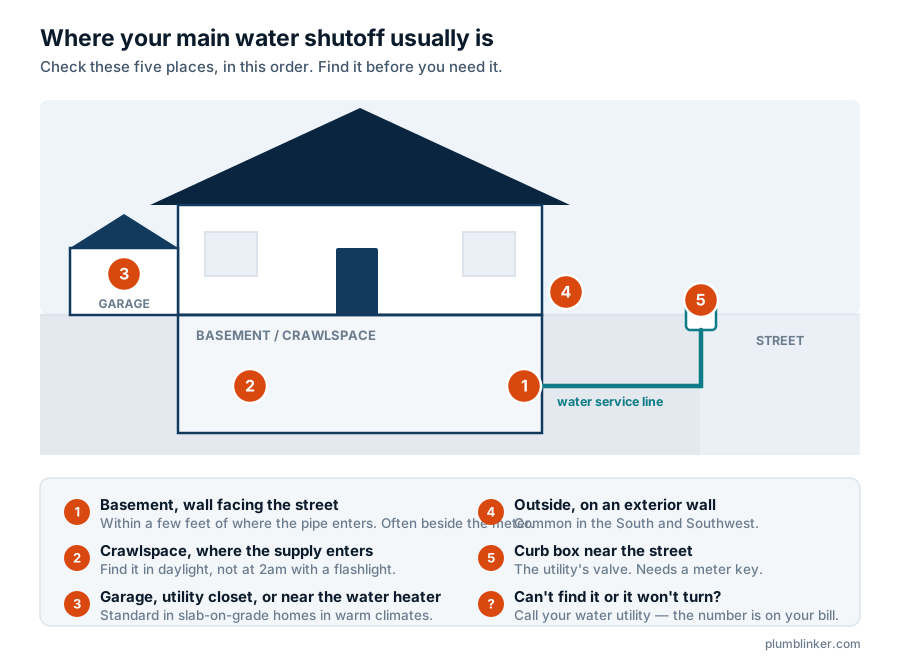
It's almost always where the water supply enters the building, on the side of the house facing the street. Check these in order:
| Home type | Where to look |
|---|---|
| Basement | On the wall facing the street, usually within a few feet of where the pipe comes through the foundation. Often near the water meter |
| Crawlspace | Where the supply line enters. May require going under the house — find it now, not at 2am with a flashlight in the rain |
| Slab, warm climate | In the garage, in a utility closet, near the water heater, or outside on an exterior wall |
| Any home | In an underground box near the street or sidewalk, marked “water” or “W.” You may need a meter key — a long T-handled tool from any hardware store |
| Apartment / condo | Usually a valve for your unit near the water heater or in a utility closet. The building main is the manager's responsibility |
The two valve types
Gate valve — a round handle like an outdoor spigot. Turn clockwise, and keep turning. It may take six or more full rotations. These are the older type and they seize with age, particularly if never operated.
Ball valve — a straight lever. A quarter turn until the lever is perpendicular to the pipe closes it. Faster, far more reliable, and what you want.
Close it fully, check that water stops at a faucet, then reopen it fully. If it's stiff, don't force it — an old gate valve can snap off in your hand and turn a dry Saturday into an emergency. If it resists, that's a scheduled daytime job: replacing it with a ball valve typically runs $150–$400 and it's some of the best money you'll spend on your home.
If you can't find it or it won't turn
- Try the fixture's own valve first. Toilets and sinks have small shutoffs directly beneath them. If the leak is isolated to one fixture, that's all you need.
- Look for the curb stop. The utility's valve in a box near the street or sidewalk. A meter key opens the lid and operates the valve.
- Call your water utility. Their emergency number is on your bill. They will shut supply at the street, usually at no charge, and they do this routinely.
- Call 911 if there's an electrical hazard. Water reaching a panel or outlets is a life-safety issue, not just a plumbing one.
After the water is off
- Open the lowest faucets in the house — basement or ground floor — to drain remaining pressurized water downward, away from the break.
- Open an upstairs faucet too, to let air in so the system drains properly.
- Turn off the water heater. On gas, set the control to “pilot” or “off”; on electric, switch off its breaker. An electric element that fires in an empty tank destroys itself in minutes.
- Photograph everything before you clean up.
Find your main shutoff. Operate it once. Make sure everyone in the household knows where it is. If it's a gate valve that feels stiff, book a plumber to swap it for a ball valve at normal daytime rates. Every expensive water damage story includes the sentence “we couldn't find the shutoff.”
Frequently asked questions
How do I turn off the water to my house?
Find the main shutoff where the supply enters the building — usually the street-facing wall of a basement, a crawlspace, a garage, or an outdoor box near the street. Turn a round gate valve clockwise until it stops, or turn a lever-style ball valve a quarter turn until it sits across the pipe.
Which way do I turn a water shutoff valve?
Clockwise to close. The old rule is “righty tighty.” A lever valve is closed when the handle is perpendicular to the pipe and open when parallel to it.
What if the valve won't turn?
Don't force it — corroded gate valves snap. Use the fixture's individual shutoff if the leak is local, or call your water utility to shut off at the street. Then have the valve replaced during normal hours.
Should I turn off the water when I go on vacation?
For trips longer than a few days, yes. A supply line failure while you're away is one of the most expensive things that can happen to a house. Turn the water heater to vacation mode too.
Plumbing emergency right now?
One call routes you to an available licensed plumber in your area. Free to call, 24 hours a day.
Call (888) 876-3092PlumbLinker is a referral service. We connect you with independent licensed plumbers — we do not perform plumbing work ourselves.